Wednesday, 3 June 2020

DSM and Lightyear join forces on integrated solar roofs for EVs


Lightyear and Royal DSM have signed an agreement to jointly scale the commercialization of Lightyear’s solar-powered roof for the EV market. The partnership aims to integrate solar-powered roofs in a variety of EVs, including cars, vans, and buses, enabling users to charge their vehicles directly with clean energy. The companies are teaming up to assess the market, starting with pilot projects for customers from the automotive and public transport sectors.

This technology was initially developed by Lightyear for the solar panels of Lightyear One. Featuring five square meters of integrated solar cells protected by double-curved safety glass, the solar roof captures sunlight continuously, whether the car is moving or stationary. 

Royal DSM VP Pascal de Sain said, “By stepping up our collaboration with Lightyear, we are creating an entirely new market for lossless high-power back-contact technology.”

Martijn Lammers, Lightyear’s co-founder and Chief of Strategy, added, “We want to revolutionize the way that people travel. By scaling up the accessibility of our solar technology through our partnership with DSM, we can accelerate the mass adoption of electric vehicles by making them sun-powered.”

Source: Lightyear


source https://chargedevs.com/newswire/dsm-and-lightyear-join-forces-on-integrated-solar-roofs-for-evs/

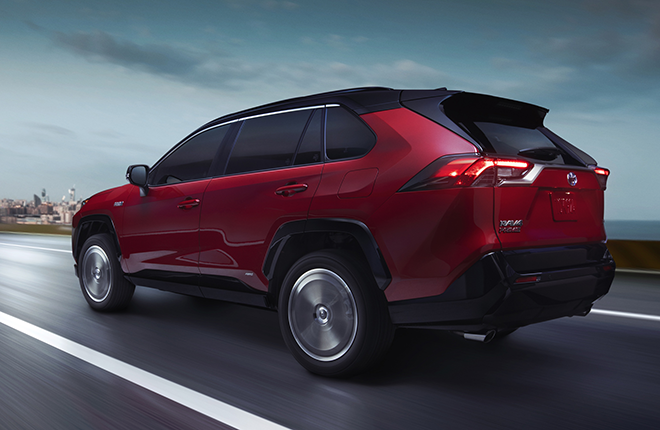
Toyota RAV4 Prime PHEV boasts 42-mile electric range, $38k base price.


Toyota has announced pricing for its upcoming RAV4 Prime. The PHEV version of the company’s popular small SUV is slated to go on sale this summer. The base SE version will start at $38,100, and the XSE variant will start at $41,425.

The RAV4 Prime boasts an electric range of 42 miles, which compares favorably with most of today’s PHEVs. The longest range currently available is the Honda Clarity’s 48 miles. The doomed Chevy Volt offered 53 miles, and the upcoming Polestar 1 is targeting 65 miles.

Toyota’s new plug-in features on-demand, generates up to 302 hp, and aspires to do 0-60 mph in 5.7 seconds, making it the quickest four-door model in Toyota’s lineup. The base model comes with a 3.3 kW onboard charger. A 6.6 kW charger is available as part of a $5,760 premium options package.

Considering the success of Toyota’s Prius Prime—it was the second best-selling plug-in in the US last year, after the Tesla Model 3—and the popularity of the legacy RAV4, we’d expect Toyota to have a winner on its hands here. But of course, this is Toyota, which paradoxically pioneered and pooh-poohs electrified conveyances. The EV gurus are skeptical. Electrek’s Fred Lambert gives the RAV4 Prime “a qualified thumbs-up.” John Voelcker expects Toyota to sell every unit it builds—but that might not be many, as the company is likely to limit sales to the ZEV states.

Source: Toyota, Electrek


source https://chargedevs.com/newswire/toyota-rav4-prime-phev-boasts-42-mile-electric-range-38k-base-price/

Monday, 1 June 2020

Tritium adds Plug & Charge capability to its charging stations

Tritium

Tritium, an Australia-based manufacturer of DC fast charging stations, has incorporated Plug & Charge technology into its products. Tritium says Plug & Charge capability is available immediately for charge point operators to deploy on its PK350kW DC High Power Chargers.

Plug & Charge, based on the ISO 15118 standard, enables direct communication between an EV and a charger, eliminating the need for a card or RFID tag. Using Plug & Charge, a charging session will be automatically and securely billed from the moment the plug connects to the vehicle, regardless of the network operator.

“This firmly and irreversibly tips the convenience scales to the recharging experience over the refueling experience,” says Tritium co-founder and CTO James Kennedy. “There is no more need for a membership card or even to swipe a bank card at a terminal; this is the first and most secure iteration available to the market and, once deployed to critical mass, will render any former payment process archaic.”

Kennedy says Tritium’s Plug & Charge solution is more secure than existing card-swipe or RFID tag payment methods. “A third party such as Hubject, which provides an automated and secure data exchange enabled by ISO 15118-conforming Public Key Infrastructure, is responsible for cryptographic certifications between the vehicle and the charger, and our technology ensures we are securely storing cryptographic keys on the charger side in a way that other chargers can’t. You’re more likely to lose a card and have someone swipe it somewhere than by someone being able to access account details via our Plug & Charge technology.”

Vehicles will also need a way to secure the vehicle-side cryptographic key, which will become commonplace with emerging models. “The vehicles will need to have the storage technology built in, in much the same way as paying for something with your smartphone requires NFC technology,” said Kennedy. “Once that becomes the norm, as NFC has, you will see the incidents of Plug & Charge payments skyrocket.”

Tritium has tested its Plug & Charge technology in a live setting at a number of its PK350kW DC High Power Chargers in Germany. The solution has also been repeatedly tested at the Tritium E-Mobility Innovation Centre in Amsterdam, where automotive manufacturers have been able to test vehicles for interoperability with Tritium’s suite of DC chargers.

“We placed our innovation centre strategically in Amsterdam and at the epicentre of Europe’s automotive manufacturing sector,” said Kennedy. “That investment has paid off, and directly led to the rapid development of the technology. It’s a major reason why we’re first to the market with a secure and advanced charger technology.”

Source: Tritium


source https://chargedevs.com/newswire/tritium-adds-plug-charge-capability-to-its-charging-stations/
VW to shift to dealer agency model for EV sales


It’s no secret that auto dealerships are a major bottleneck for EV sales. Legacy automakers may cast an envious eye on Tesla’s direct-to-customer sales model, but they cannot practically (or legally) cut the dealers out of the equation. Now Volkswagen may have found a way to solve this dilemma, at least in Germany.

VW has announced that its German dealerships will not be the primary point of contact for buyers of the new ID family of EVs. Rather, customers will place their orders directly with Volkswagen, and choose a local dealer, which will act as an agent. Dealerships will provide test drives, finalize transactions, and deliver the vehicles. Prices and dealership commissions will be fixed.

This neatly eliminates several of the problems with selling EVs through the traditional dealership model. Dealers will no longer have an incentive (nor will they have the opportunity) to steer potential EV customers to gas or diesel vehicles. Sales associates don’t need to become EV experts, or do the extra work required to sell an unfamiliar product. The salesperson hands over the vehicle, the dealership gets paid, and everybody’s happy.

“All our partners are now 100% on board,” said Holger B. Santel, head of VW sales in Germany. “From the customer’s perspective, Volkswagen and retail become one unit with the agency model. And this seamless, coordinated shopping experience at all touchpoints is exactly what our customers want.”

The new model also offers financial benefits for dealerships. “The dealer no longer has to finance vehicles in advance,” Santel explained. “We also bear inventory cost and the costs associated with showroom vehicles. We are offering dealers an extremely attractive leasing concept for demonstration vehicles.”

“The agency model brings significant financial relief for dealers, and that is particularly important at the present time,” said Dirk Weddigen von Knapp, Chairperson of the Volkswagen and Audi partner association. “Our partners can, therefore, focus on what makes retail so indispensable: personal, competent customer care.”

Source: Electrek


source https://chargedevs.com/newswire/vw-to-shift-to-dealer-agency-model-for-ev-sales/

Swindon is taking orders for its new “crate” EV powertrain


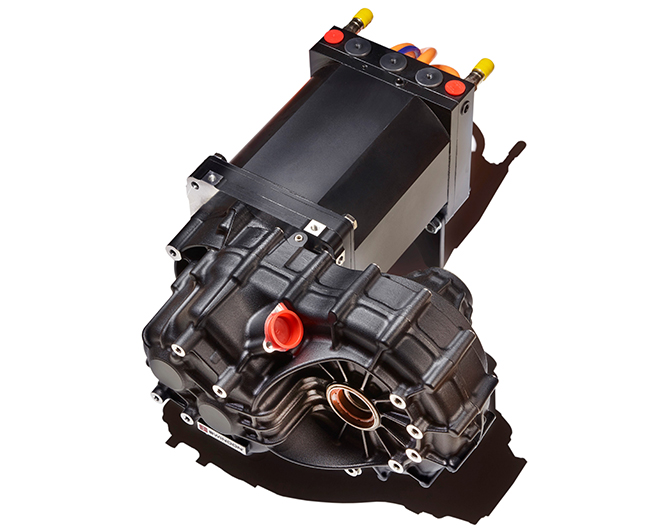
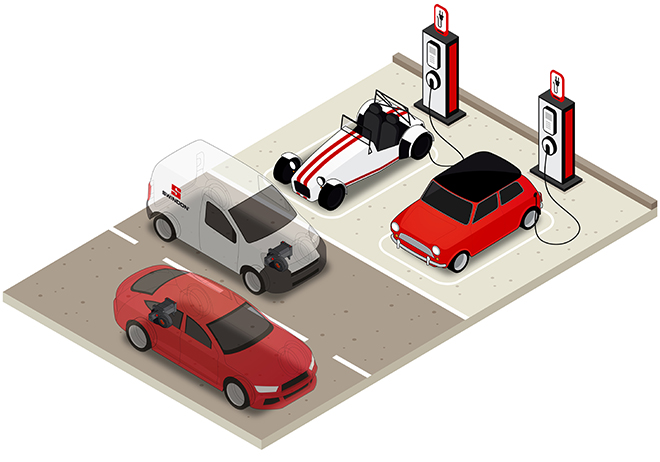
Swindon Powertrain’s compact HPD 80 kW “crate” motor for EV conversions is now available to order from the company’s web site. The motor is suitable for OEMs, niche vehicle manufacturers, electric car conversion companies and home mechanics. Prices start at £6,400+VAT for the 80 kW motor, transmission and differential. Options for cooling, inverters and limited-slip differential are also available. Deliveries will commence in August 2020.

Swindon says it has refined and improved the HPD’s specification since the product was first announced six months ago. Weighing 49.9 kg including lubricants, the HPD system features a brushless, permanent magnet motor, transmission, open differential and one meter of cabling. The package size is 441 mm x 384 mm x 228 mm.

With multiple installation points and the ability to site the inverter and cooling packs separately, the HPD can fit in a wide range of vehicles. Two inverter options, depending on battery voltage, are available, although customers can also use their own. Dependent on the tire size and top speed requirement, buyers can decide between two no-cost gear ratio options using Swindon Powertrain’s online calculator.

“It’s now easier than ever for anyone to convert a car, truck or even quad bike to electric,” says MD Raphaël Caillé. “HPD is a new, properly engineered system with a year’s warranty. With deliveries starting in August, now could be the ideal time to start planning a project.”

Source: Swindon Powertrain 


source https://chargedevs.com/newswire/swindon-is-taking-orders-for-its-new-crate-ev-powertrain/

High pulse energy capabilities for pre-charge and discharge resistors for EV applications


Sponsored by EBG Resistors

Professional resistors for electric vehicles

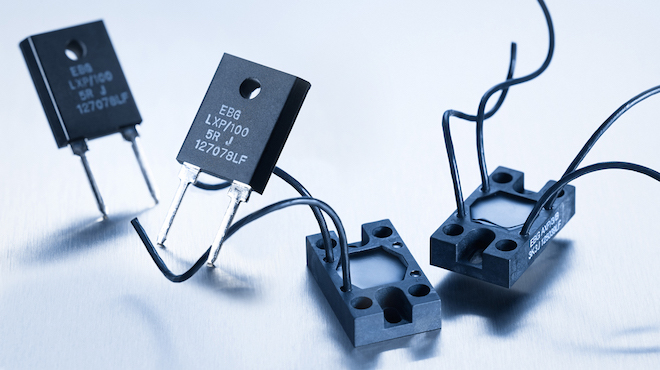
Since 1993, EBG Resistors has been working on the cutting-edge development of resistor technology. Leading manufacturers of electric motors, medical equipment and frequency converters use our power resistors because of their impact on performance and long-term operating reliability.

High power resistors are used in a variety of applications in the Electric Vehicle (EV) industry. There are ranges of uses including but not limited to power converters for charging systems, power control units, power distribution units (PDU) and motor control units – also battery modules.

Behind the advancement of this innovative technology EBG Resistors works hard and hand-in-hand with engineers to solve problems related to EV. We offer solutions to pre-charge, discharge and other applications. We aim to improve system performance, long-term production and to provide a wide range of eDrive tech solutions.

The main advantages of EBG Resistors includes small package size, wide resistance range, and high reliability, safety and pulse capability – in addition to easy mounting and handling.

Join the many companies already using EBG Resistors in their EV applications. We welcome the opportunity to participate in new product development for engineers with a vision for the future.

DOWNLOAD THE EV APPLICATION NOTES AND EV PRODUCT CATALOGUE.


source https://chargedevs.com/newswire/high-pulse-energy-capabilities-for-pre-charge-and-discharge-resistors-for-ev-applications/

California Energy Commission funds two lithium recovery projects in Salton Sea region


The California Energy Commission (CEC) has awarded $7.8 to two lithium recovery projects in the Salton Sea region, where high concentrations of the soft metal are found dissolved in the brine produced by geothermal hotspots.

The Salton Sea Known Geothermal Area contains an estimated six million tons of recoverable lithium. However, there are significant barriers to exploiting this resource—the challenges have to do with the harsh chemistry of the brine and the difficultly of developing a low-cost and selective process for lithium recovery.

In March, an Oakland-based startup, Lilac Solutions, which believes it has found a promising process to profitably extract lithium in the area, announced a $20-million funding round.

Now the CEC has funded two separate lithium recovery projects.

The agency has awarded $6 million to BHER Minerals for a demonstration project at an existing geothermal power facility in Calipatria, where the company hopes to cost-effectively process at least 100 gallons of geothermal brine per minute to produce battery-grade lithium carbonate.

The project team will test a novel approach to processing the challenging brine chemistry. It hopes to develop a pre-treatment process that will prepare the incoming brine for lithium removal, and to demonstrate a system capable of long-term, economic recovery of lithium from pre-processed brine.

The second grant, $1.8 million, will go to Palo Alto-based Materials Research for a pilot-scale demonstration project that will use a newly developed sorbent material to extract lithium from brine, and a separate process to form high-purity lithium carbonate, which has additional applications in industry and medicine.

Source: CEC via Green Car Congress


source https://chargedevs.com/newswire/california-energy-commission-funds-two-lithium-recovery-projects-in-salton-sea-region/