Friday, 15 May 2020

Tesla says its new Terafactory will be producing Model Y by the end of this year

Tesla gigafactory NV

Tesla may have decided on the site of its anticipated Cybertruck plant, and it intends to waste no time. Electrek, citing “a reliable source familiar with the matter,” reports that the next Tesla Gigafactory (excuse me, make that “Terafactory”) will be built in the vicinity of Austin, Texas. (The AP is reporting that the list has been narrowed to Austin or Tulsa, Oklahoma.)

Electrek’s source says the Gigafactory Nevada engineering team has been told to start the process of planning the new plant, which will produce both Model Y and the new Cybertruck.

The choice of location is no big surprise, as Tesla has already said that its next Gig would be located somewhere in the middle of the country—the announcement doesn’t seem to be related to Mr. Musk’s recent threat to move operations out of California.
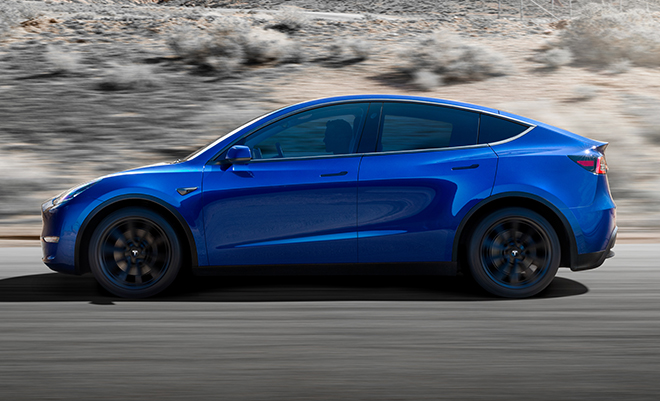
The shocker is the proposed timeline. Tesla wants the Texas (or Tulsa) Terafactory to be producing Model Ys by the end of this year—an ambitious goal even by Tesla’s standards (and one that would have been considered laughable in the auto industry of only a few years ago). Gigafactory Shanghai began production within a year after breaking ground, so the new goal sounds impressive, but not impossible.

In the first phase, the new plant will have only a general assembly line, which will presumably assemble components shipped from Fremont or elsewhere, Electrek’s source indicates. The Terafactory will start cranking out Cybertrucks late next year.

Source: Electrek, AP


source https://chargedevs.com/newswire/tesla-says-its-new-terafactory-will-be-producing-model-y-by-the-end-of-this-year/


VW ID.4 already in production, will be about the size of Tesla Model Y, sell for $40k


Volkswagen’s ID.3 will be a milestone vehicle—the company’s first EV based on the new MEB platform. Unfortunately, deliveries have been delayed by software problems, and are now expected to take place in a big batch this summer. It’s also unfortunate that VW has no plans to sell the small electric hatch in North America, but this was probably the right decision, bein’ as how us ‘Mericans don’t cotton to little bitty cars.

However, VW has another, potentially even more exciting MEB-based EV in the pipeline, and a sneak peek at the company’s Zwickau factory indicates that it’s already in production.

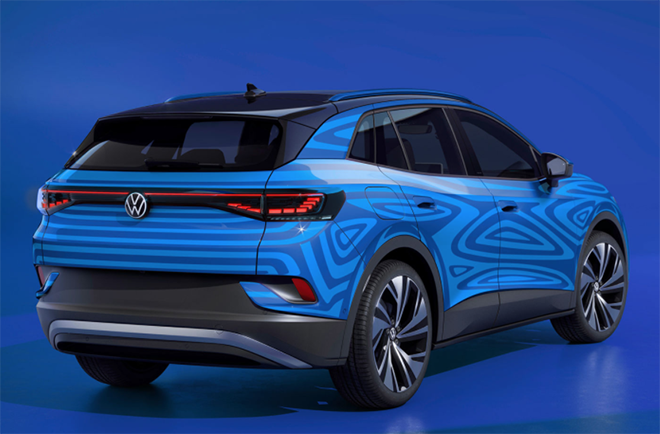
The VW ID.4 is an electric crossover based on the ID CROZZ concept, and it’s expected to be similar in size and range to Tesla’s Model Y (a planned unveiling in April got scotched, alas). Electrek reports that VW plans to “produce and sell the ID.4 in Europe, China and the US,” and that the starting price is expected to be around $40,000.

Now German YouTuber nextmove, an assiduous observer of VW’s electric efforts, has made a video about a recent visit to the Zwickau factory (in German with English subtitles). He saw several things that he agreed not to talk about (and Germans tend to take such undertakings seriously), but he did mention that he saw the ID.4 being produced at the facility.

VW plans to convert the Zwickau plant to 100% EV production, and has promised to crank out 100,000 ID.3 and ID.4 units this year.

Source: nextmove via Electrek


source https://chargedevs.com/newswire/vw-id-4-already-in-production-will-be-about-the-size-of-tesla-model-y-sell-for-40k/

Thursday, 14 May 2020

Shanghai plans to deploy 100,000 data-collecting EV chargers


Once again, news of projects in China highlights the piddling scale of US EV efforts. The Shanghai municipal government recently announced plans to deploy 100,000 charging ports, which will double as data-collecting interactive devices.

Electric utility State Grid announced in April that it would invest 2.7 billion yuan ($383 million) to roll out 78,000 charging piles across the country.

These new charging points (or piles, as some Chinese call them) will have enhanced data-collecting capabilities. “They can offer battery information, user habits, vehicle location, and other data,” Sun Huifeng, President of CCID Consulting, told China Daily. “With such data, services including secondhand car evaluation and user portraits can be further expanded.”

“Charging piles are not merely a charging station,” said Ding Rui, CEO of charging solution provider X-Charge. “Charging is just a 2% function of a charging pile, and the remaining 98% will be interactive.”

The days when China was an EVSE laggard lie in the past. Navigant Research Analyst Sam Abuelsamid recently estimated that the country has some 3.4 million charging ports, twice the number in North America.

He told Electrek that data gathered from chargers is valuable. “There are lots of good reasons for gathering the data, including understanding where people are using charging to aid in making decisions about where to build out infrastructure.” The data will also be important for new applications, including vehicle-to-grid integration and Plug&Charge.

Sources: Electrek, China Daily


source https://chargedevs.com/newswire/shanghai-plans-to-deploy-100000-data-collecting-ev-chargers/

Clean Energy Trust invests in battery lifecycle SaaS company Renewance


Clean Energy Trust, a nonprofit that makes seed investments in clean-tech startups from the US Midwest, has announced an investment in Renewance, a provider of a software-as-a-service (SaaS) platform for battery lifecycle management.

Renewance provides battery management solutions to the energy storage and EV industries. Services include: enabling clients with defective or end-of life batteries to compare, select and contract with battery recyclers on the Renewance Connect platform; turnkey recycling solutions; and other services to facilitate management of energy storage assets throughout the full lifecycle.

Renewance Connect allows users to request a quote from registered waste logistics providers and recyclers when they have DDR (damaged, defective, recalled) or end-of-life batteries. They can then select the most cost-competitive offer.

“It is critical that clean-tech innovation continues unabated during these challenging times, as climate change remains an existential risk,” said Erik Birkerts, CEO of Clean Energy Trust. “We have worked hard to maintain our catalytic investment activity and entrepreneurial support during the current crisis, and we are delighted to welcome Renewance to our portfolio of impactful, cleantech startups.”

Source: Clean Energy Trust via Green Car Congress


source https://chargedevs.com/newswire/clean-energy-trust-invests-in-battery-lifecycle-saas-company-renewance/

Tesla Autobidder software aggregates solar and storage into a giant virtual utility


The future of energy is distributed. Instead of buying energy from a small number of giant power plants, traders on the energy market are increasingly dealing with a large number of small, widely distributed assets. Energy assets include not only power-generating plants such as wind and solar installations, but storage facilities such as stationary batteries (and, in the future, EVs equipped with V2G technology).

This complex web of assets needs sophisticated software to manage it, and Tesla, ever thinking ahead, has developed a software product called Autobidder that some say will enable Tesla Energy to become a giant distributed global utility as it deploys more and more solar and energy storage systems, at both residential and utility scale.

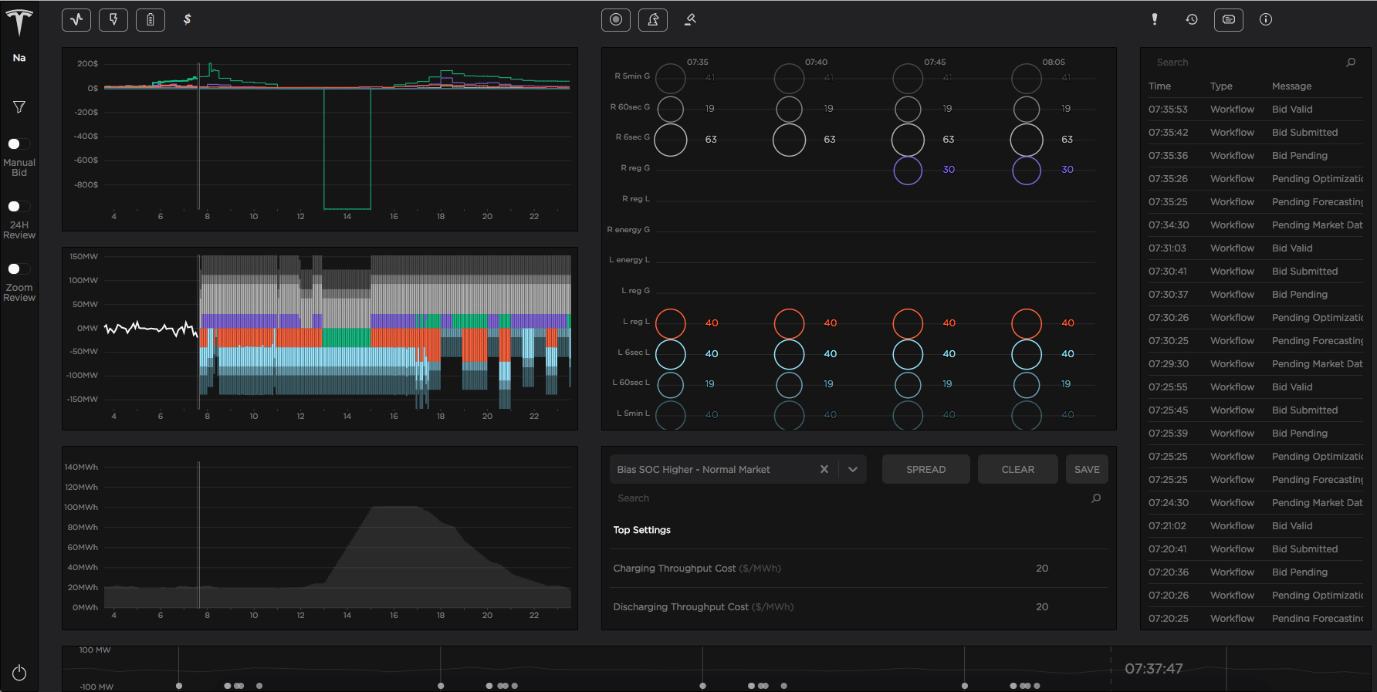
Tesla Autobidder’s Real-time Market Operations

“Autobidder provides independent power producers, utilities, and capital partners the ability to autonomously monetize battery assets,” reads Tesla’s description of the product. “Autobidder is a real-time trading and control platform that provides value-based asset management and portfolio optimization, enabling owners and operators to configure operational strategies that maximize revenue according to their business objectives and risk preferences.”

“Autobidder is successfully operating at Hornsdale Power Reserve (HPR) in South Australia, and through market bidding, has added competition to drive down energy prices,” says Tesla.

The platform, which apparently also works with non-Tesla energy storage products, is in use at other sites around the world. “Autobidder has hundreds of megawatt-hours of assets under management that have supplied gigawatt-hours of grid services globally. Autobidder operates at every scale: from aggregations of behind-the-meter residential systems to 100 MW utility-scale installations.”

Electrek reports that Tesla is using Autobidder to manage its Powerwall deployment with Green Mountain Power in Vermont. The Telegraph tells us that Tesla has applied for a license to become an energy provider in the UK, where it has already installed several Powerpack projects.

Sources: Electrek, The Telegraph


source https://chargedevs.com/newswire/tesla-autobidder-software-aggregates-solar-and-storage-into-a-giant-virtual-utility/

Chroma Systems’ new bidirectional DC power supplies for EV component testing


Chroma Systems Solutions, a provider of power conversion test equipment, is announcing the first-phase release of its new 62000D bidirectional DC power supplies. Bidirectional DC power supplies offer two-quadrant operation with positive current/positive voltage as well as negative current/positive voltage, enabling both DC power output and regenerative DC loading. The absorbed energy feeds back to the grid with a conversion efficiency up to 93% and can operate in constant voltage, constant current, and constant power modes.

Pre-compliant with LV123 and LV148 standards for EV component testing, the 62000D is suitable for testing power components such as bidirectional on-board chargers (BOBC), bidirectional DC converters, and DC-AC motor drivers. It can also perform battery simulations. The 62000D has a high-speed CV dynamic response slope that can be controlled to 180 V/ms which is applicable to the electrical characteristics tests of many vehicle guidelines. 

The 62000D series offers power ratings of 6 kW, 12 kW, and 18 kW, and achieves 180 kW in parallel and series operation. Voltages will range from 0~100 V/600 V/1,200 V/1,800 V with a current rating from 0~540 A.

Source: Chroma Systems Solutions


source https://chargedevs.com/newswire/chroma-systems-new-bidirectional-dc-power-supplies-for-ev-component-testing/

Wednesday, 13 May 2020

Charged announces virtual conference on EV engineering


Since most of our favorite in-person conferences have been canceled or postponed indefinitely, Charged decided to organize a virtual conference on EV engineering September 1 – 3, 2020.

The conference includes live webinar sessions and interactive Q&As, as well as new on-demand webinars and whitepaper downloads available in the weeks leading up to the live event.

Just like the content Charged brings you every day, conference topics will span the entire EV engineering supply chain and ecosystem including motor and power electronics design and manufacturing, cell development, battery systems, testing, powertrains, thermal management, circuit protection, wire and cable, EMI/EMC and more.

Keynote speaker and new session announcements are coming soon. Register now for updates.

Now open: Call for speakers

Do you have technical and practical expertise in an EV-related engineering field?‍ Share it with the EV industry at our virtual conference. Suggest a topic or speaker to learn more about presenting a live or pre-recorded webcast.

Sponsorships and promotional opportunities are also available.
Learn more here.


source https://chargedevs.com/newswire/charged-announces-virtual-conference-on-ev-engineering/