Thursday, 17 September 2020

Eliminate waste and optimize battery pack production with advancements in pump technology and sealant equipment (Webinar)


Do you struggle with inconsistencies in your plant? Are you dealing with a skills gap and aging workforce? Learn how to overcome current challenges and stay competitive in these changing times with our webinar, Eliminate waste in your factory to optimize production.

Tune in to this webinar to see the latest advancements in pump technology and sealant equipment from Nordson.

This webinar hosted by Charged on October 7, 2020, at 2:00 pm EDT will include a live Q&A session.

Register now – IT’S FREE!


source https://chargedevs.com/newswire/eliminate-waste-and-optimize-battery-pack-production-with-advancements-in-pump-technology-and-sealant-equipment-webinar/

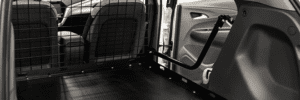
Rear seat delete option converts the Chevy Bolt to a tiny electric van


Cargo capacity has always been a sore point with legacy-brand (non-Tesla) EVs. The already limited cargo space in hatchbacks such as the LEAF and Bolt has been cannibalized for the battery, and the rear seats are not designed to fold flat.

Well, if you’re willing to sacrifice the rear seats entirely, you may be able to get a Chevy Bolt that has plenty of cargo space. A commercial version of the Bolt can be ordered with a Rear Seat Delete Package, which increases the Bolt’s nominal cargo capacity from 56.6 cubic feet with the rear seats folded to 66 cubic feet, and greatly increases its usefulness by providing a flat loading floor.

As GM points out, this gives you more usable cargo space than many an SUV, including the Chevy Equinox.

This version of the Bolt can only be ordered through GM’s fleet sales program. It’s unclear how, or whether, an individual can go about buying one. (Or can you simply remove the seats yourself?)

A couple of companies offer aftermarket kits to maximize the utility of the Bolt micro-van. Adrian Steel’s Cargo upfit consists of a crossover style partition and 1/8-inch-thick floor mats. Knapheide’s upfit package offers the ability to add accessories such as boxes, drawers or shelving.

Source: GM Fleet via The Drive


source https://chargedevs.com/newswire/rear-seat-delete-option-converts-the-chevy-bolt-to-a-tiny-electric-van/

Electrify America creates new business unit for its home charging products


Electrify America is on a 10-year, $2-billion mission to build a comprehensive public DC fast charging network across the US. Last year it expanded into home charging with the launch of its Level 2 Home Charger.

Now EA has formed a new business unit called Electrify Home, which aims to leverage the company’s considerable charging expertise to deliver a line of fast and effective home charging products.

The Electrify Home online store offers a one-stop solution—EV owners can buy the Electrify America Level 2 Home Charger, arrange for installation through Qmerit, and get 24/7 customer support.

The Electrify America Level 2 Home Charger comes with a NEMA 14-50 power plug, and can also be hard-wired. It comes with a docking station that allows for wall mounting. It sports a NEMA 3R enclosure suitable for indoor or outdoor locations, and a 24.6-foot long cable. An LED color indicator displays charging status. The charger comes with a 3-year warranty and 24-hour tech support.

“Right now, about 80 percent of electric vehicle charging is done at home. With the launch of Electrify Home, we’re providing flexible and forward-thinking home charging solutions for EV drivers of today and tomorrow,” said Nina Huesgen, Senior Manager, Home and eCommerce at Electrify America. “EV drivers need more charging options to feel truly independent and confident in their decision to go electric, which is why Electrify America has expanded its focus to create a connected and smart home charging ecosystem.”

Source: Electrify America


source https://chargedevs.com/newswire/electrify-america-creates-new-business-unit-for-its-home-charging-products/

Porsche Digital spins off e-mobility loyalty program as &Charge


Porsche Digital has spun off an e-mobility company called &Charge. The Frankfurt-based startup is offering what it calls the first loyalty program for e-mobility in Europe. It provides a digital platform through which users can obtain credit for their online purchases, which can be redeemed for electric mobility services.

For purchases, bookings and other transactions that are processed via the online platform, users receive “kilometers,” which can be redeemed as charging credits for EVs or free trips with public e-scooters and car-sharing services. Customers can also use their collected “kilometers” to support certified climate protection projects, in partnership with climate solutions provider South Pole.

The &Charge platform is currently available in Germany, Austria, Belgium and the Netherlands. Other countries are to follow shortly. Porsche Digital says over 600 e-commerce companies and 11 mobility providers have joined the initiative as partners.

“With our platform, we…create lucrative incentives for sustainable mobility,” says Eugen Letkemann, CEO of &Charge. “The key to this is that we can offer our users a broad portfolio of services, both in terms of collecting and redeeming kilometers.”

Source: Porsche


source https://chargedevs.com/newswire/porsche-digital-spins-off-e-mobility-loyalty-program-as-charge/

Wednesday, 16 September 2020

GM unveils Ultium Drive family of integrated electric drive units


General Motors has unveiled a family of five interchangeable drive units and three motors, which will power its next generation of EVs. “Ultium Drive will help the company transition its current portfolio to a fully electric lineup, providing significant advantages over GM’s previous EVs in performance, scale, speed to market and manufacturing efficiencies,” says GM.

Ultium Drive (part of the larger Ultium platform, which also includes battery cells and an innovative wireless BMS) combines electric motors and single-speed transmissions. The Ultium Drive family covers front-wheel drive, rear-wheel drive and all-wheel drive configurations, including high-performance and off-road capabilities.

GM has also released some details about its Ultium battery system.

“Ultium Drive will be more responsive than its internal combustion equivalents, with precision torque control of its motors for smooth performance,” says GM. “These motors within Ultium Drive are expected to offer industry-leading torque and power density across a wide spectrum of different vehicle types.”

Ultium Drive follows the trend of integrating powertrain components to save weight and space. For example, by integrating the power electronics into the drive units’ assemblies, GM says it has reduced the mass of the power electronics by nearly 50 percent compared to its previous generation of EVs, saving cost and packaging space while increasing performance by 25 percent.

“GM has built transmissions for many notable automakers,” said Ken Morris, VP of Autonomous and Electric Vehicle Programs. “Making motors, transmissions, driveline components and systems are among GM’s best-known competencies, and our manufacturing expertise is proving not only transferable but advantageous as we make the transition to EVs.”

“As with other propulsion systems that are complex, capital-intensive and contain a great deal of intellectual property, we’re always better off making them ourselves,” said Adam Kwiatkowski, GM Executive Chief Engineer, Global Electrical Propulsion. “GM’s full lineup of EVs should benefit from the simultaneous engineering of Ultium Drive. Our commitment to increased vertical integration is expected to bring additional cost efficiency to the performance equation.”

Source: GM


source https://chargedevs.com/newswire/gm-unveils-ultium-drive-family-of-integrated-electric-drive-units/

Navistar’s IC Bus to deliver 18 electric school buses in British Columbia


IC Bus, a school bus manufacturer owned by Navistar, has secured an order for 18 Type C electric school buses to be delivered to 14 school districts in British Columbia.

“We are very happy to announce the first order of our electric CE school bus,” said IC Bus VP Trish Reed. “Electric is an exciting opportunity for IC Bus and we look forward to expanding our presence following this initial purchase.”

“Electric school buses are the natural next step towards zero greenhouse gases for the future of the children we serve,” said Robyn Stephenson, Manager of Transportation Services at School District No. 22 in Vernon, BC. “IC Bus was able to provide a terrific product and the support necessary to help us achieve our sustainability goals.”

Over the past 18 months, IC Bus and NEXT (Navistar’s eMobility business unit) have been consulting with a group of transportation supervisors in British Columbia to obtain real-world operational data, route profiles and climate data. “The transportation supervisors offered us unique insight by sharing their operational wants and needs while keeping in perspective the very diverse climate they work in, which will serve as a model for most of North America,” said Joel Landry of Western Canada Bus, the IC Bus dealer that’s working with the school districts. “From mountain ranges to the coastal rainforest and the Okanagan desert, British Columbia presented a perfect challenge for the engineers, which will benefit us moving forward.”

The consultations made it clear that the school districts would require charging infrastructure guidance. NEXT’s charging solutions team will provide site planning services to each of the school districts, covering what the company calls “the four Cs”—Consulting, Constructing, Charging and Connecting.

IC Bus will begin delivery of the electric buses in 2021.

Source: Navistar


source https://chargedevs.com/newswire/navistars-ic-bus-to-deliver-18-electric-school-buses-in-british-columbia/

Hitachi ABB Power Grids launches charging system for EV fleets


Hitachi ABB Power Grids, a newly formed joint venture between the two electronics giants, has launched a new “grid-to-plug” EV charging system for public transport and commercial fleet operators. The new solution, called Grid-eMotion Fleet, is designed to enable fleet operators to efficiently scale up their operations.

The Grid-eMotion Fleet solution comes in standard containers that integrate the grid connection and charging systems. It uses DC technology and can connect to any type of power network. The company says that, compared to a conventional connection to the AC grid, Grid-eMotion Fleet reduces the space required by 60 percent, and depot cabling by 40 percent. The solution incorporates renewable energy, grid integration, an energy management system, and data analytics.

Grid-eMotion Fleet is designed to calculate bus energy consumption and plan effective services for passengers. Digital analysis monitors battery life data, route data, traffic simulation and depot control to optimize efficient power use, energy storage and overnight charging.

“The Grid-eMotion Fleet launch is a game-changer for anyone managing public transport and commercial EV fleets,” says Niklas Persson, Managing Director of the Grid Integration business unit at Hitachi ABB Power Grids. “Grid-eMotion Fleet delivers unprecedented scalability, space savings and operational efficiency.”

Source: Hitachi ABB Power Grids


source https://chargedevs.com/newswire/hitachi-abb-power-grids-launches-charging-system-for-ev-fleets/